•
•
•
•
•
•
•

A guide to interpreting global growth forecasts, geopolitical risks, AI investment and the assumptions behind economic projections.
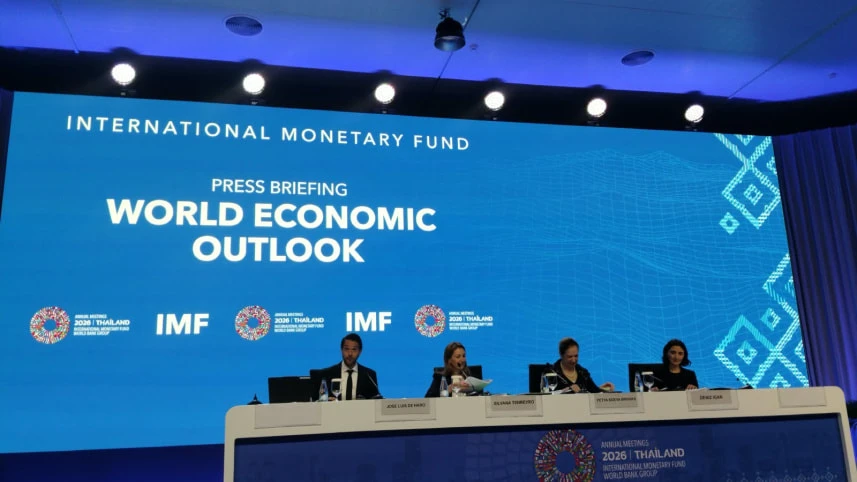
The International Monetary Fund's World Economic Outlook (WEO) is a recurring assessment of global growth, inflation and economic risks. It combines economic data, country analysis and projections. Forecasts are conditional estimates, not promises: they depend on assumptions about energy prices, conflict, trade, monetary policy, productivity and financial conditions.
For the October 2026 edition, use the IMF's official report and statistical tables for exact growth rates and country figures. Do not repeat a percentage from a headline without checking the report's release date, table, units and whether the figure is a forecast or a revised estimate.
Conflict can affect production, shipping routes, insurance costs, energy supply and consumer confidence. Higher energy and transport costs can raise business expenses and, in some cases, consumer inflation. The effect differs across countries depending on whether they import or export energy, the composition of their industries and the policy response.
Businesses should model more than one scenario. A base case can use the IMF's central forecast; downside cases can test a longer disruption, higher input costs or weaker demand.
Investment in AI infrastructure can support demand for chips, data centres, software and electricity. The longer-term productivity effect is less certain and depends on adoption, worker skills, business processes, competition and the cost of implementation. Spending on technology is not automatically equal to productivity growth.
Companies should distinguish near-term capital expenditure from measurable gains such as shorter processing times, improved quality or new revenue. They should also consider cybersecurity, data governance, energy use and the skills needed to deploy systems responsibly.
No. It is a projection based on assumptions and the data available at publication. Actual outcomes can differ.
No. Global aggregates can hide large differences between countries, industries and households.
Use the IMF's official WEO page and report tables. Verify the publication date and whether figures are actual, estimated or projected.
The value of the WEO is not a single headline number but a structured view of the assumptions and risks shaping the global economy. Businesses should use the official tables, build scenarios and update decisions as new data arrives.
This article was authored and reviewed by Wipidia's technical editorial desk in Jalandhar, Punjab. Every code snippet, algorithm breakdown, and strategic framework is independently tested against live production standards before publication.