•
•
•
•
•
•
•

A plain-English guide to the Fed's September decision, inflation, jobs, borrowing costs and the risks facing households and markets.
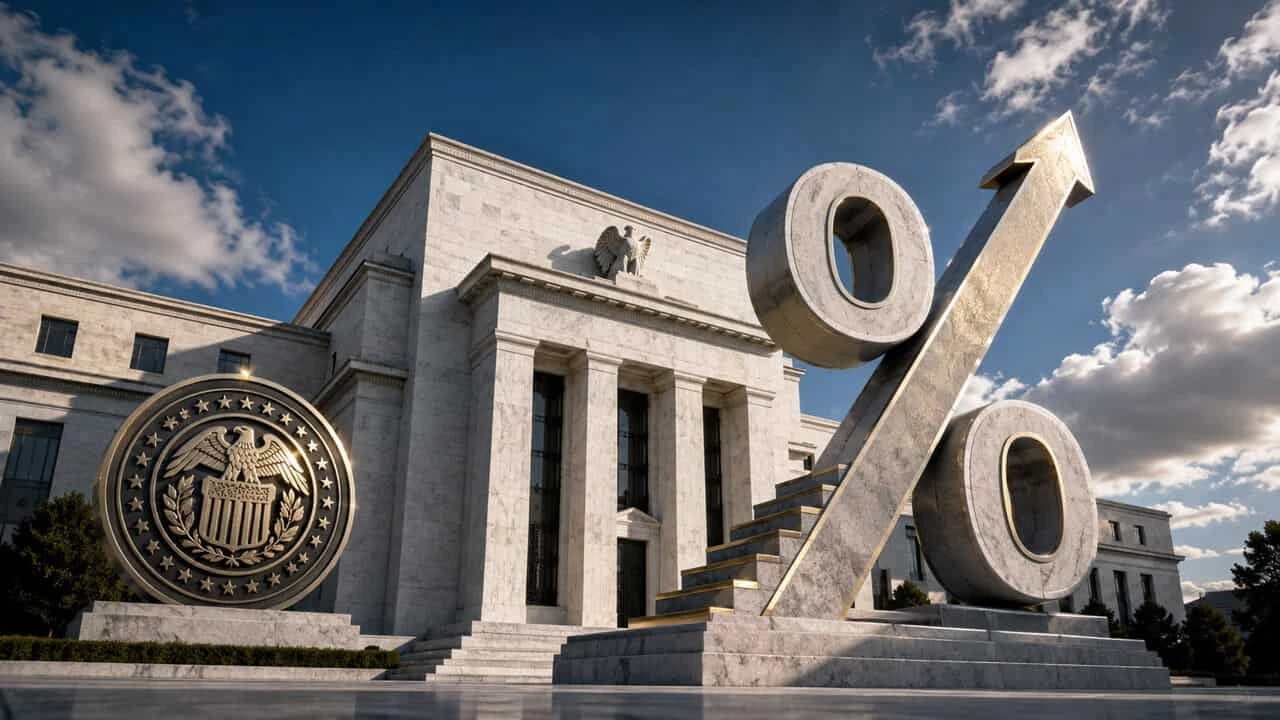
On September 16, 2026, the Federal Open Market Committee (FOMC) raised the target range for the federal funds rate by 0.25 percentage point to 3.75%–4.00%. The Fed said inflation remained elevated and that the decision supported its goal of returning inflation to 2% over time. Its statement also described economic activity as expanding at a solid pace and uncertainty as elevated.
That is the confirmed policy decision. The Fed's statement does not mean every bank immediately changes every loan or savings rate by the same amount. Consumer and business rates depend on the product, lender, market conditions and other risk factors.
The Fed has a dual mandate: maximum employment and price stability. When inflation remains too high, raising the policy rate can make borrowing more expensive, moderate demand and reduce pressure on prices. The effect takes time and is uncertain, which is why policymakers consider a range of data rather than one headline.
The September statement highlighted elevated inflation alongside resilient spending and solid activity. In that situation, policymakers may judge that easing financial conditions too soon could make it harder to bring inflation back toward target. The trade-off is that higher rates can also restrain investment, housing activity and hiring.
The federal funds rate is the rate banks charge one another for overnight lending of reserve balances. The FOMC sets a target range, and the Federal Reserve uses its policy tools to steer market rates toward that range.
The policy rate influences other rates, but it is not the same as a mortgage rate, auto loan APR or credit-card rate. Lenders also price in funding costs, credit risk, competition, term and operating costs. Long-term Treasury yields and mortgage rates can move before a Fed meeting as investors revise expectations.
Rates on many variable-rate products can respond to changes in benchmark rates, though timing and pass-through differ. People carrying balances may pay more interest. Paying down high-interest debt and understanding the APR and fees can matter more than trying to predict the next Fed move.
New fixed-rate mortgage rates depend heavily on longer-term bond yields and market expectations, so they do not move one-for-one with the federal funds rate. Higher financing costs can reduce purchasing power, while existing fixed-rate borrowers generally keep the rate specified in their contracts.
Some savings accounts and certificates of deposit may offer higher yields when policy rates are elevated, but banks do not always pass increases through fully or immediately. Compare the annual percentage yield, withdrawal rules, fees and deposit protections.
Tighter monetary policy can cool demand over time. That may reduce inflation pressure, but it can also slow hiring and wage growth. The effects vary across industries and arrive with a lag.
Higher borrowing costs can cause firms to delay projects, hold more cash or reassess expansion plans. Companies with significant floating-rate debt may face higher interest expense. Equity markets can react to both the rate decision and the Fed's explanation of what could happen next.
For investors, the key distinction is between what has already happened and what markets expect. Asset prices often reflect anticipated policy changes before they occur. A rate increase can therefore coincide with rising or falling markets depending on the outlook for inflation, earnings, growth and future rates.
The Fed has not promised a fixed path for rates. Policymakers assess incoming inflation, employment, spending and financial data, along with risks to both parts of the mandate. One decision should not be treated as a guarantee of another increase or a near-term cut.
To follow the next decision, read the official FOMC statement and meeting materials rather than relying on a prediction headline. This article reflects the September 16, 2026 statement; later decisions may change the rate range and outlook.
The FOMC raised the target range to 3.75%–4.00%, effective after its September 16 meeting.
No. Mortgage rates also respond to longer-term bond yields, inflation expectations, lender pricing and borrower characteristics.
Low rates can support borrowing and demand, but if inflation is too high, the Fed may use tighter policy to move inflation toward its 2% objective. Policymakers weigh both employment and price stability.
This article is general education, not personalised financial advice. Decisions depend on your goals, time horizon, risk tolerance, debt and financial circumstances.
The September 2026 increase reflected the Fed's concern that inflation remained elevated, even as economic activity was holding up. Higher policy rates can restrain demand, but their effects on household borrowing, savings, jobs and markets vary. For the most accurate update, use the Fed's published decision and data rather than treating any forecast as certain.
This article was authored and reviewed by Wipidia's technical editorial desk in Jalandhar, Punjab. Every code snippet, algorithm breakdown, and strategic framework is independently tested against live production standards before publication.