•
•
•
•
•
•
•
A practical recovery guide
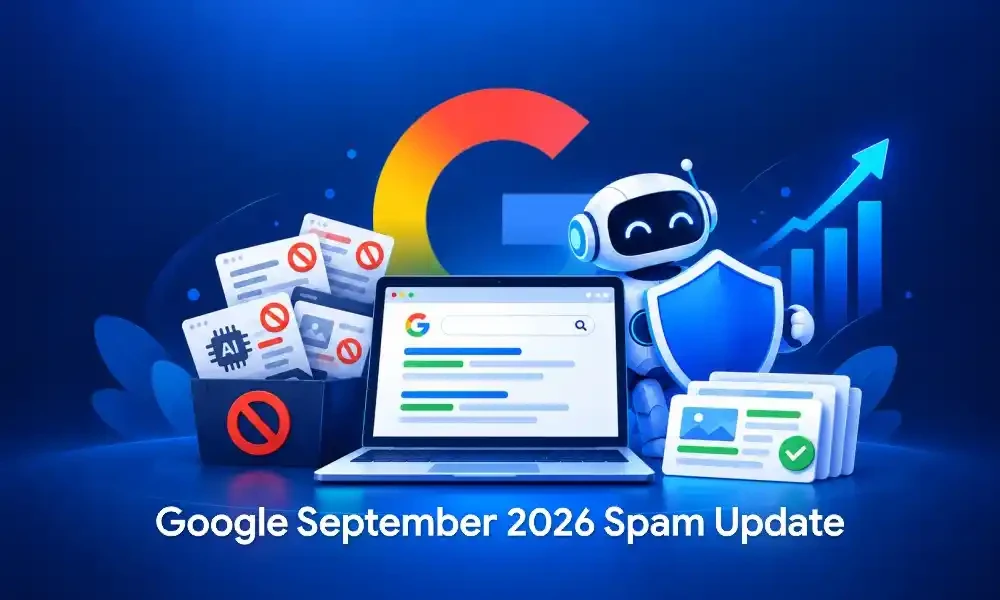
Google's September 2026 spam update began rolling out on September 24, 2026, and industry trackers reported a second phase on September 30. It is the latest in a run of spam-focused updates this year: Google's Search Status Dashboard also logged spam updates in March, June and August 2026, alongside core updates in March and May and a Discover-specific update in February. For site owners, the pace is the message: enforcement against manipulative tactics is now a recurring event rather than an occasional one.
This guide explains what a spam update is, how it differs from a core update, which tactics tend to be targeted, and how to diagnose and recover if your traffic dropped.
A spam update changes how Google's automated systems detect and demote content that violates its spam policies. Unlike a core update, which broadly re-evaluates how helpful and relevant pages are across the web, a spam update is narrower. A ranking drop that lines up with a spam update usually points to one identifiable issue, rather than a general reassessment of quality. That distinction matters because the fix is different: you remove a violation rather than gradually improve everything.
| Factor | Spam Update | Core Update |
|---|---|---|
| Scope | Targets policy violations | Broad quality and relevance re-evaluation |
| Typical cause of loss | A specific tactic | Overall helpfulness compared with competitors |
| Recovery path | Remove the violation | Improve content over time |
Spam updates generally address behaviors Google lists in its spam policies. The ones most often discussed by the industry include:
Not every traffic dip is caused by an update. Before changing anything, work through a structured check.
Because the second phase reportedly landed on September 30, give the rollout time to settle before drawing firm conclusions. Reacting to day-by-day volatility can lead to changes that do more harm than good.
Once you have identified a likely cause, act deliberately.
The most reliable defense is to treat spam policies as an ongoing compliance obligation instead of a reaction to each update.
| Area | Quarterly Check |
|---|---|
| Content | Every page serves a real user need and has a clear owner |
| Links | No paid or exchanged links without proper attributes |
| Third-party content | Reviewed, relevant and clearly labeled |
| Technical | Crawlers and users see the same content |
Using AI tools to help produce content is not itself a violation. The risk lies in publishing at scale without human review, expertise or a genuine reader benefit.
A spam update is a compliance check. Sites that follow Google's spam policies are rarely affected, and those that are hit can usually trace the loss to a specific tactic. Confirm the timing, find the violation, fix it thoroughly and then give the systems time to reassess. With multiple spam updates already this year, building good habits now is far cheaper than recovering later.
This article was authored and reviewed by Wipidia's technical editorial desk in Jalandhar, Punjab. Every code snippet, algorithm breakdown, and strategic framework is independently tested against live production standards before publication.