•
•
•
•
•
•
•

The November 3 midterms will determine control of Congress. Here are the Senate contests to watch, the seat math, and how different outcomes could shape the final two years of the Trump administration.
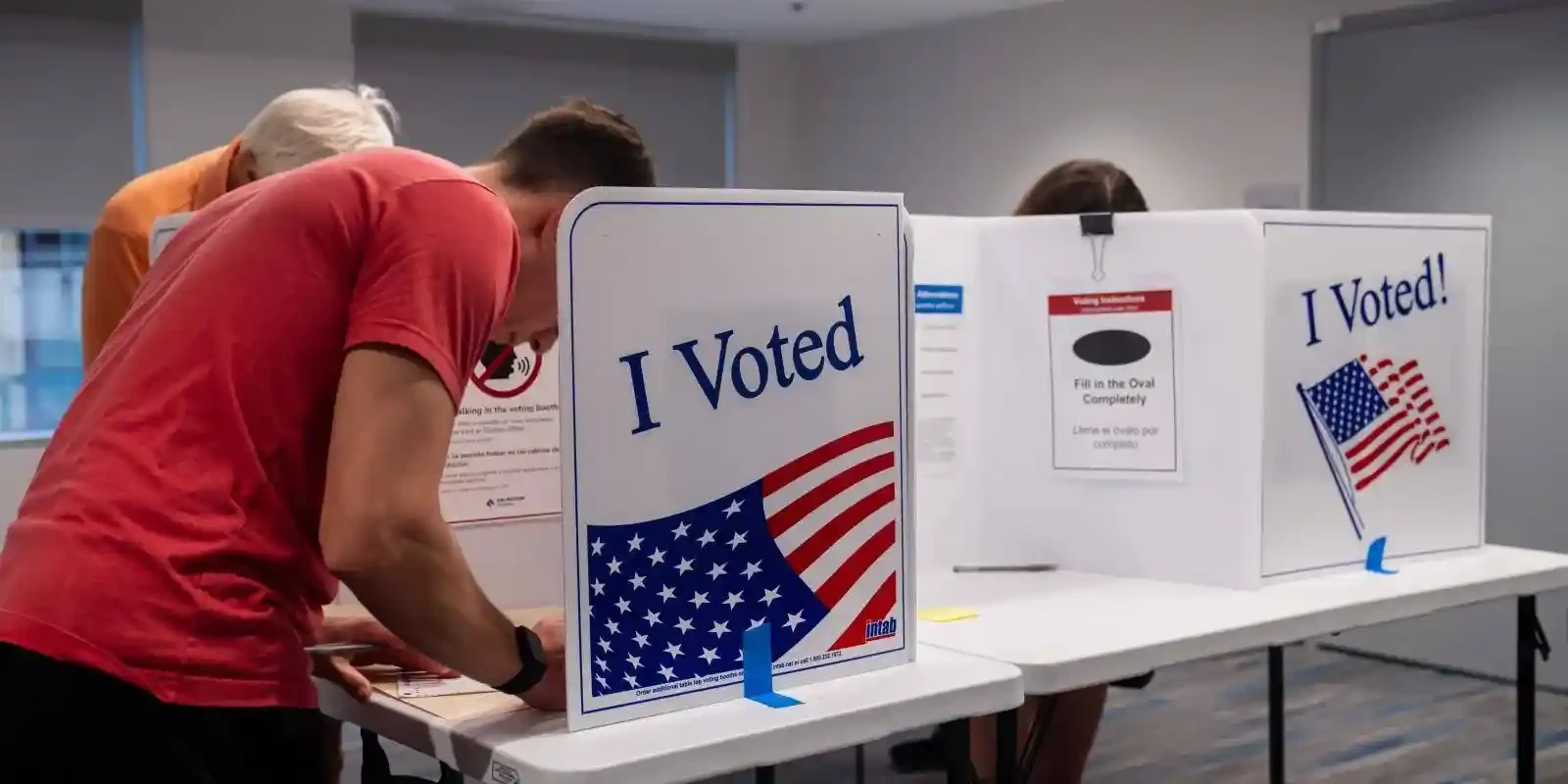
US voters go to the polls on November 3, 2026, to elect members of Congress and decide control of the House of Representatives and Senate. The result will shape the final two years of President Donald Trump’s term, including congressional oversight, budget negotiations, judicial confirmations and the prospects for new legislation.
The election has not yet taken place as of October 22, 2026. Polls, race ratings and campaign forecasts describe the state of the contest; they are not election results.
| Detail | Information |
|---|---|
| Election Day | November 3, 2026 |
| Offices at stake | All 435 House seats and roughly one-third of the Senate |
| Current Senate balance | Republicans hold 53 seats; Democrats and independents caucusing with them hold 47 |
| Senate control | A simple majority generally requires 51 seats, or 50 with the vice president breaking a tie |
| Main question | Whether either party can gain control of one or both chambers |
Seat thresholds and control calculations depend on the final membership and party alignment. Consult official Senate and House records for the current composition.
Republicans currently hold a 53–47 Senate majority. Democrats need a net gain of four seats to reach 51 seats if Republicans retain the vice presidency and the usual tie-breaking arrangement. A 50–50 Senate would generally leave Republicans in control because the vice president can cast a tie-breaking vote.
The map is challenging because Democrats must win seats held by Republicans while defending their own vulnerable seats. Candidate quality, turnout, campaign spending and late-breaking events can shift individual contests.
The following contests have received attention in recent reporting. Race competitiveness can change, so these should be treated as key races to monitor, not guaranteed party flips.
Democratic Senator Jon Ossoff is defending a seat in a closely watched state. The outcome will depend on turnout, the candidates’ campaigns and how voters assess national and state issues.
Michigan is another important battleground. The open-seat contest has drawn attention because both parties see it as a potential route to improving their Senate position.
Republican Senator Susan Collins faces a competitive re-election campaign. Maine’s voting history and the candidates’ appeal to independent voters make the race important to both parties.
North Carolina is a closely contested state where the Senate race could affect the overall balance. Candidate performance and turnout in urban, suburban and rural areas will matter.
Democrats are also monitoring other Republican-held seats where candidate strength and local conditions could make the contest more competitive than national voting patterns alone suggest.
For a current race-by-race assessment, compare recent reporting with nonpartisan election analysts and official state election information.
All 435 House seats are up for election. The House majority can change with a relatively small number of district-level results, making suburban districts, open seats and competitive regions particularly important.
Recent reporting has described Democrats as having a plausible path to House control, but the outcome remains uncertain before Election Day. The House and Senate can also produce different results: one party could win the House while the other retains the Senate.
If Republicans retain both chambers: The administration would have a clearer path to advancing its legislative agenda, though internal party disagreements and Senate procedural rules would still matter.
If Democrats win the House: They would gain committee leadership and stronger oversight powers, while major legislation could face more obstacles.
If Democrats win the Senate as well: They would gain greater influence over nominations and legislation, but presidential veto power, Senate rules and narrow margins would continue to constrain what could pass.
If control is split: Budget deadlines, government funding and other high-stakes negotiations could become more difficult, increasing the risk of legislative gridlock.
Before Election Day, use polling averages and race ratings as indicators rather than predictions of certainty. After polls close, rely on state election officials for certified results and established news organisations for clearly labelled projections. A projected winner is not the same as a certified result.
Election Day is Tuesday, November 3, 2026.
With Republicans holding 53 seats and the vice president able to break a tie, Democrats generally need a net gain of four seats to secure a 51-seat majority.
Georgia, Michigan, Maine and North Carolina are among the contests drawing national attention, alongside other races that could affect the final balance.
Yes. House and Senate elections are separate, and their outcomes can differ.
No. As of October 22, 2026, Election Day is still ahead. Polls and forecasts are not final results.
The 2026 midterms will determine whether the president’s party retains congressional control or faces a more divided government. Senate races in Georgia, Michigan, Maine and North Carolina are among those to watch, while competitive House districts could decide the lower chamber. The most useful approach is to follow updated, sourced race reporting and distinguish forecasts from official election results.
This article was authored and reviewed by Wipidia's technical editorial desk in Jalandhar, Punjab. Every code snippet, algorithm breakdown, and strategic framework is independently tested against live production standards before publication.