•
•
•
•
•
•
•

A sourced overview of Vladimir Putin’s early life, intelligence service, rise through Russian politics, years in power, and the major debates surrounding his leadership.
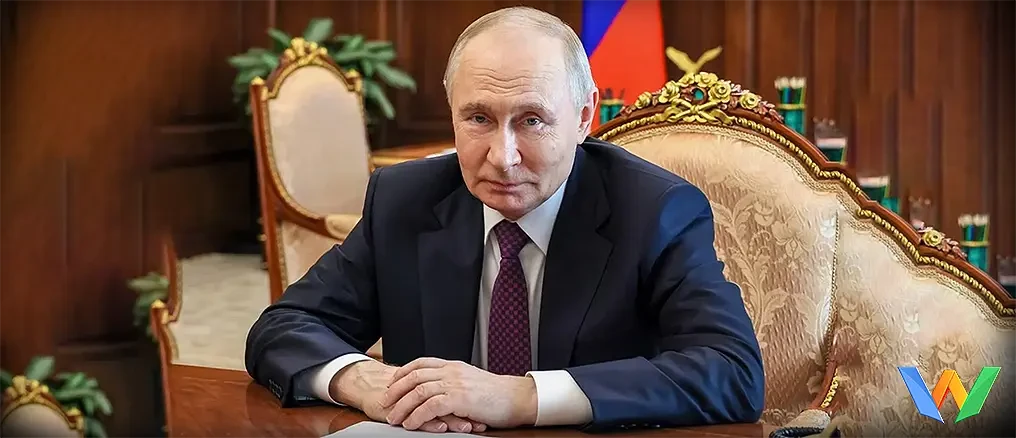
Vladimir Vladimirovich Putin is a Russian politician and former intelligence officer who has been the central figure in Russian national politics since the late 1990s. Born on October 7, 1952, in Leningrad—now Saint Petersburg—he studied law, served in the Soviet Committee for State Security (KGB), and entered government after the Soviet Union dissolved.
Putin became acting president on December 31, 1999, following Boris Yeltsin’s resignation. He won the presidential election in March 2000 and later served as prime minister during Dmitry Medvedev’s presidency before returning to the presidency in 2012.
| Detail | Information |
|---|---|
| Full name | Vladimir Vladimirovich Putin |
| Born | October 7, 1952 |
| Birthplace | Leningrad, Russian SFSR, Soviet Union (now Saint Petersburg, Russia) |
| Education | Law degree, Leningrad State University |
| Early career | Soviet KGB officer |
| Became acting president | December 31, 1999 |
| Political role | President of Russia, with a prime-ministerial interval from 2008 to 2012 |
Putin grew up in post-war Leningrad in a working-class family. He attended Leningrad State University, where he studied law and graduated in 1975. His early life and later public accounts describe an interest in martial arts, especially judo, which became part of his public image.
Biographical details about private family life are limited in reliable public sources. This article focuses on documented public roles and events rather than unverified personal claims.
After graduating, Putin joined the KGB, the Soviet Union’s state security and intelligence agency. His service included work in Dresden, East Germany, during the 1980s. He left active KGB service in 1990 as the Soviet political system was entering its final period.
The experience shaped his professional background, but claims about the precise influence of his intelligence career on every later policy decision are interpretations rather than simple biographical facts.
After returning to Russia, Putin worked in Saint Petersburg’s municipal administration under mayor Anatoly Sobchak. He later moved to Moscow and held senior positions in the presidential administration and the Federal Security Service (FSB), the principal successor organisation to the KGB’s domestic-security functions.
In August 1999, President Boris Yeltsin appointed Putin prime minister. On December 31 of that year, Yeltsin resigned and Putin became acting president. Putin won the March 2000 presidential election and was inaugurated in May.
Putin served as president from 2000 to 2008. Because Russia’s constitution at the time did not permit a third consecutive presidential term, he became prime minister while Dmitry Medvedev held the presidency from 2008 to 2012. Putin returned to the presidency in 2012 and won subsequent elections in 2018 and 2024.
Changes to Russia’s political and constitutional system, including amendments adopted in 2020, altered the framework governing presidential terms. The effect of these changes and the fairness of Russian elections have been disputed by opposition figures, international observers and the Russian government.
Putin’s government has emphasised central state authority, national security and the role of the federal government in Russian political life. Supporters point to periods of economic recovery, state capacity and Russia’s return to a more assertive international role. Critics point to restrictions on opposition activity, independent media and civil society, along with concerns about electoral competition and political freedoms.
A balanced biography should distinguish government claims, supporters’ assessments, opposition accounts and findings by independent observers rather than present one political interpretation as uncontested fact.
Putin’s foreign policy has sought to increase Russia’s influence in neighbouring regions and challenge aspects of the post-Cold War European security order. A defining event of his later presidency was Russia’s full-scale invasion of Ukraine in February 2022, following Russia’s annexation of Crimea in 2014 and conflict in eastern Ukraine.
The invasion led to extensive international sanctions, large-scale casualties and displacement, and condemnation from many governments and international institutions. The Russian government has offered its own justifications for the war, which Ukraine and many other countries reject. Coverage of this subject should rely on independently verified reporting and clearly attribute disputed claims.
Putin has cultivated a public image associated with physical fitness, judo, outdoor activities and national symbolism. He was married to Lyudmila Putina; their divorce was announced in 2013. Reliable reporting about his private life is limited, and claims not supported by credible sources should be treated cautiously.
Putin’s long tenure has shaped Russia’s domestic institutions, economy, security policy and relations with Europe, the United States and China. His presidency is also the subject of sustained debate over political centralisation, civil liberties, military action and the future of Russia’s relationship with the international system.
Understanding his career requires both a chronology of public events and attention to the consequences of policy decisions for Russian citizens and neighbouring countries.
He was born on October 7, 1952, in Leningrad, now Saint Petersburg.
Yes. He served as a KGB officer, including a posting in Dresden, East Germany.
He became acting president on December 31, 1999, and won the presidential election in March 2000.
Yes. He served as prime minister from 1999 to 2000 and again from 2008 to 2012.
His tenure has involved major changes to Russia’s political system, restrictions on opposition and media according to critics, and foreign-policy decisions including the full-scale invasion of Ukraine in 2022.
This article was authored and reviewed by Wipidia's technical editorial desk in Jalandhar, Punjab. Every code snippet, algorithm breakdown, and strategic framework is independently tested against live production standards before publication.