•
•
•
•
•
•
•

Microsoft’s October security release addresses a record number of vulnerabilities, including an actively exploited Windows Shell flaw. Here is how to prioritise updates using exploitation risk and product exposure.
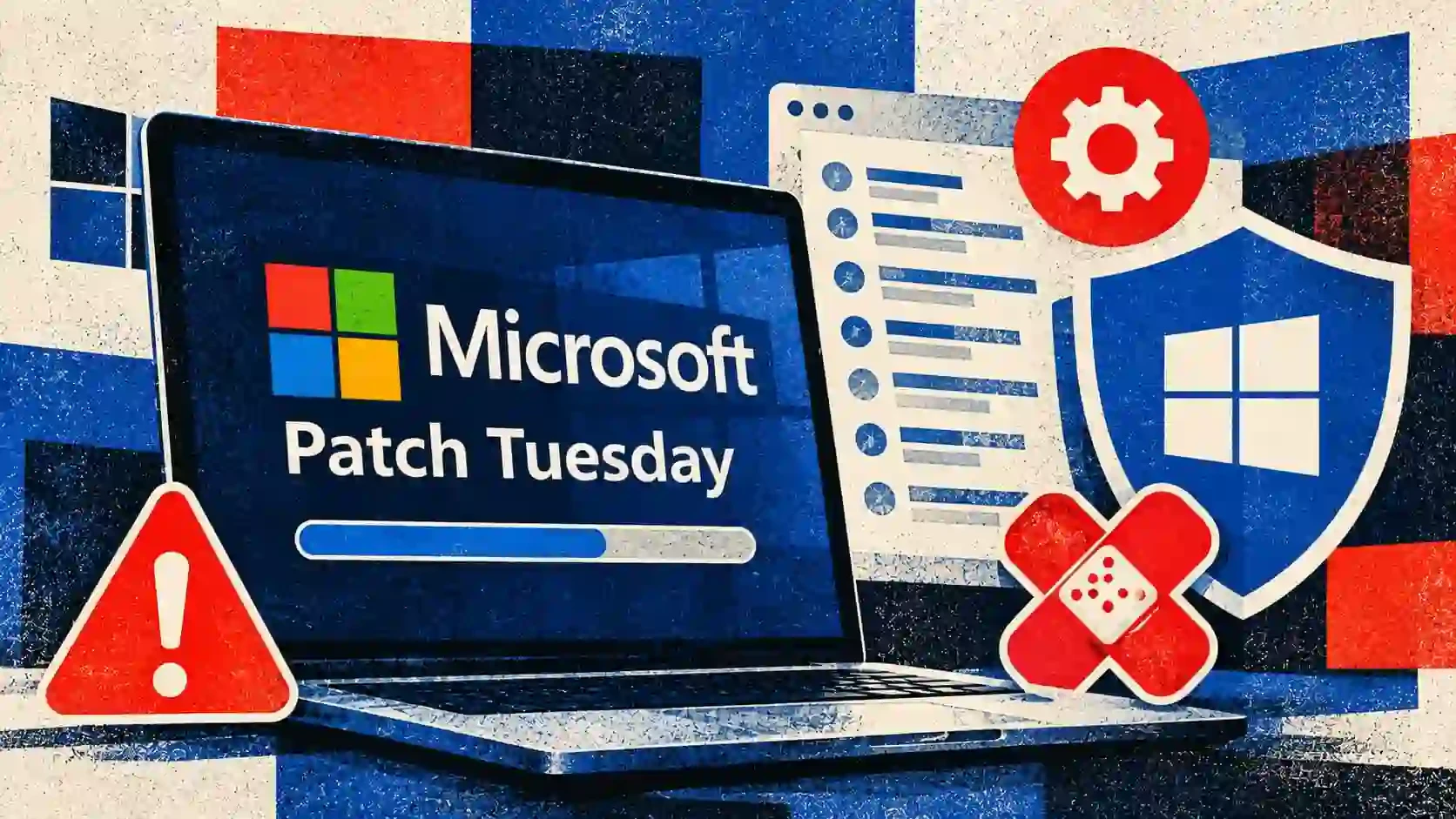
Microsoft’s October 2026 Patch Tuesday release addresses a record 1,413 vulnerabilities, according to security reporting. The most urgent issue for many organisations is CVE-2026-96951, a Windows Shell security-feature bypass that has been exploited in the wild. Other flaws were publicly disclosed before the updates became available.
The total count is a useful indicator of the scale of the release, but it does not mean every vulnerability presents the same risk to every organisation. Prioritisation should account for known exploitation, exposed products, attack requirements and the systems an organisation actually uses.
| Item | What administrators should know |
|---|---|
| Release | Microsoft October 2026 Patch Tuesday |
| Reported vulnerability count | 1,413 |
| Urgent issue | CVE-2026-96951, Windows Shell security-feature bypass |
| Exploitation status | CVE-2026-96951 reported as exploited in the wild |
| Other disclosed flaws | CVE-2026-108398 and CVE-2026-92707 were publicly disclosed |
| Recommended approach | Inventory affected products, prioritise exploited flaws, deploy updates and verify installation |
Counts can differ between reports depending on how advisories and CVEs are tallied. Use Microsoft’s Security Update Guide as the authoritative source for the affected products, package versions and individual advisories.
Start by assessing systems affected by CVE-2026-96951. Reports describe a security-feature bypass involving Mark of the Web protections, which can warn users about files downloaded from the internet. Exploitation requires user interaction, such as opening a specially crafted file, but that does not make the issue safe to ignore.
Check Microsoft’s advisory and the CISA Known Exploited Vulnerabilities catalog for applicable deadlines and remediation guidance. Prioritise affected, internet-connected or high-value endpoints according to your organisation’s exposure and incident-response policy.
Assess CVE-2026-108398 and CVE-2026-92707 against the products and configurations in your environment. Public disclosure can give attackers information useful for developing exploits, but severity and practical exposure differ by flaw. Confirm the official advisory before deciding the deployment order.
Next, identify affected servers and services reachable from untrusted networks, identity systems, remote-access infrastructure, collaboration platforms and systems holding sensitive data. Apply the relevant vendor updates using your normal emergency change process, with testing and rollback plans appropriate to the system.
Do not stop after the headline vulnerability is addressed. Review the full Microsoft advisory list for Windows, Office, developer tools, SharePoint, Exchange, Azure and other products in use. Use a risk-based deployment plan and track exceptions with owners and deadlines.
For a personal Windows computer:
For managed devices, use your organisation’s approved patch-management system. Verify the installed build or update package against Microsoft’s guidance; a successful download alone does not prove that every required update has been applied.
AI-assisted analysis can help researchers and vendors find certain classes of software flaws faster. Security researchers have also noted that improved discovery methods can increase the number of reported vulnerabilities. However, attributing the entire October total to AI would be too simplistic: the count reflects multiple products, research efforts and disclosure processes.
For defenders, the practical lesson is to automate inventory, advisory matching and deployment reporting where possible. Do not prioritise patches by headline count or by an unverified claim that a vulnerability was AI-discovered.
No. The release includes issues with different severity ratings and different applicability. Review the individual advisories and the products you use.
CVE-2026-96951 deserves urgent review because reports say it has been exploited in the wild. Confirm applicability and remediation instructions in official advisories.
No. AI may help discover vulnerabilities, but the total cannot be attributed to AI alone.
Run Windows Update, install applicable updates, restart when required and verify the installed build against Microsoft’s advisory.
Use Microsoft’s Security Update Guide and the relevant product-specific release notes.
October’s Patch Tuesday is a reminder that patching works best when it is risk-based, not driven by a large headline number. Organisations should first identify whether they are affected by the actively exploited Windows Shell flaw, then review publicly disclosed issues and all other applicable updates. Use official advisories, verify installation and document systems that remain exposed.
This article was authored and reviewed by Wipidia's technical editorial desk in Jalandhar, Punjab. Every code snippet, algorithm breakdown, and strategic framework is independently tested against live production standards before publication.